
Coastal Cabana EC: Project Review for 2026 Buyers
Lifestyle-Led Executive Condominium in Pasir Ris for Family Upgraders (District 18)
View Coastal Cabana EC Project Page →Summary
Coastal Cabana is a 99-year leasehold Executive Condominium located along Jalan Loyang Besar in Pasir Ris, developed by Qingjian Realty, China Communications Construction Co., and ZACD Group under the Government Land Sales programme. The project comprises 748 units across 16 mid-rise blocks and is positioned as a large-scale, family-oriented EC for East-side HDB upgraders.
Unlike transport-led or town-centre ECs, Coastal Cabana is built around lifestyle adjacency rather than commuting efficiency. Its appeal comes from proximity to Pasir Ris Park, Downtown East, and the coastal recreational corridor, complemented by large family-sized layouts and the Deferred Payment Scheme (DPS). These are genuine advantages for the right household. They also define the project's limitations: MRT access requires a combination of walking and bus travel, the entry quantum sits at the upper end of historical EC norms, and exit liquidity is selective rather than broad.
Coastal Cabana works best for owner-occupiers who genuinely value the Pasir Ris lifestyle and are willing to hold through and beyond the Minimum Occupation Period. For buyers who need MRT walkability, low entry quantum, or a fluid post-MOP exit, the project's structural characteristics will create friction regardless of how attractive the lifestyle narrative sounds.
Project Factsheet
Item | Details |
|---|---|
Project Name | Coastal Cabana |
Address | Jalan Loyang Besar (Nos. 2 to 32) |
District / Planning Area | District 18 / Pasir Ris |
Region | Outside Central Region |
Tenure | 99-year leasehold |
Developer | Qingjian Realty, China Communications Construction Co., ZACD Group |
Development Type | Executive Condominium |
Site Area | 28,405.50 sqm |
Plot Ratio | 2.5 |
Total Units | 748 |
Block Configuration | 16 blocks (mostly 12 storeys; selected blocks at 11 storeys) |
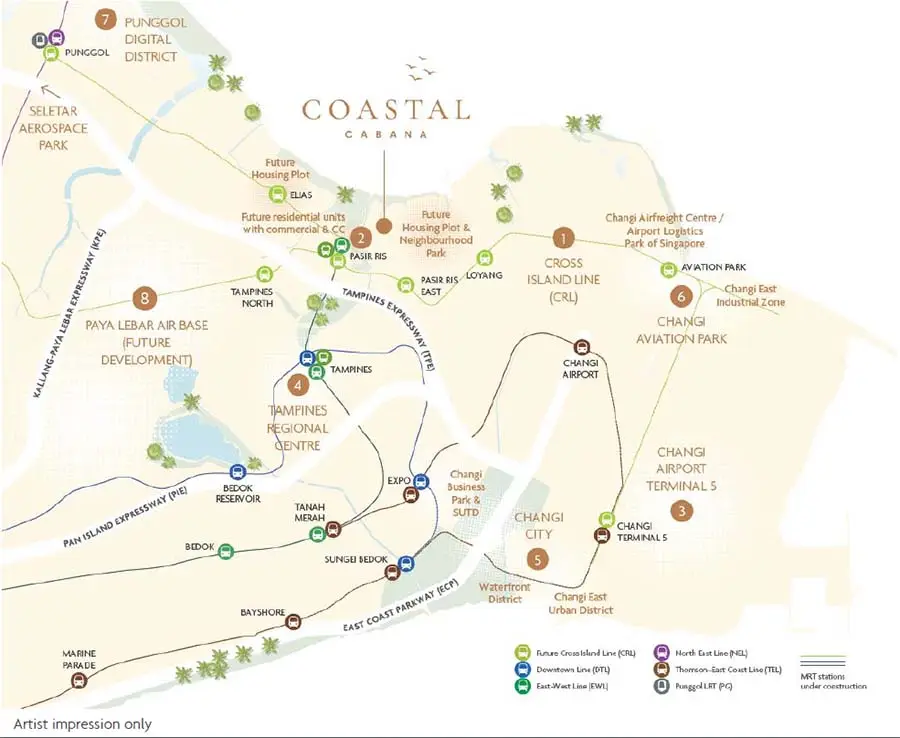
MRT Access | Pasir Ris MRT via walk and bus |
Launch Absorption | Approximately 68% |
Expected TOP | 31 March 2029 |
Location Context: Lifestyle Over Transit
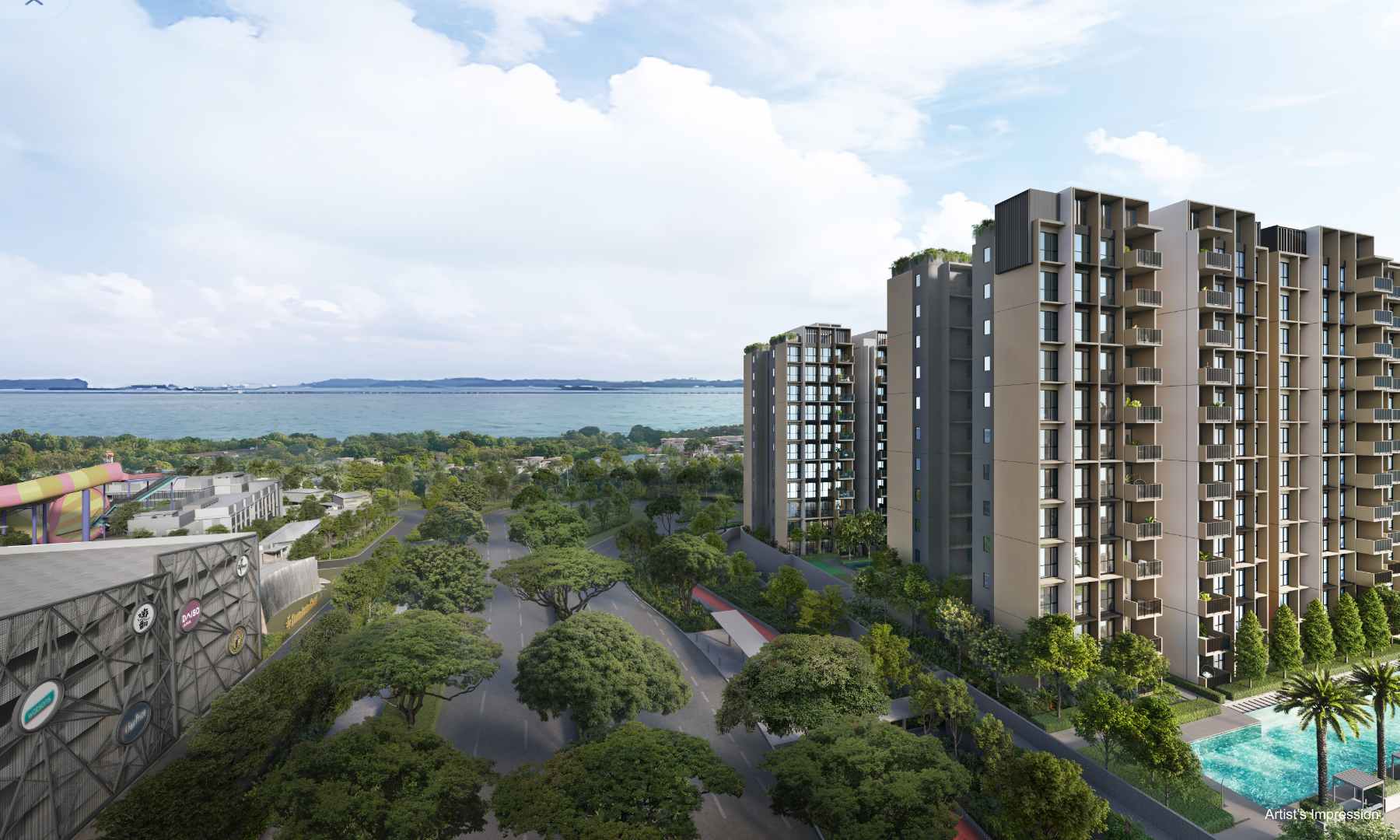
Pasir Ris occupies a distinct position within the OCR. Less defined by commuting efficiency than Tampines or Punggol, it is shaped instead by recreational space, coastal access, and a quieter residential character. Coastal Cabana sits closer to the eastern recreational spine — Pasir Ris Park, Downtown East, and the surrounding leisure infrastructure — than to the Pasir Ris town centre or MRT.
This orientation is deliberate. The project was designed around lifestyle adjacency rather than transit immediacy, and buyers should evaluate it on that basis. For drivers, expressway access via TPE and PIE is functional. For car-lite households, the need to walk and take buses to reach Pasir Ris MRT is a structural reality of daily life, not a secondary detail. This affects not only daily convenience but long-term resale liquidity.
Pasir Ris will see incremental improvements through town rejuvenation and transport upgrades over time, but Coastal Cabana's value case is not premised on near-term transformation. Buyers should assess the location based on how it functions today rather than on planning narratives.
What Coastal Cabana Is and Is Not
Coastal Cabana is a lifestyle-led, family-oriented Executive Condominium designed for East-side upgraders who prioritise space, recreational proximity, and payment flexibility. It offers genuine differentiation through coastal adjacency, large family layouts, and the DPS payment structure.
What it is not: a transport-led or walk-to-MRT EC, the lowest-quantum entry point in the eastern EC market, a boutique or privacy-focused development, or a project suited for short-cycle capital gains. Buyers who need any of these attributes should recognise the mismatch early rather than assuming the lifestyle positioning compensates.
Development Scale and Site Design
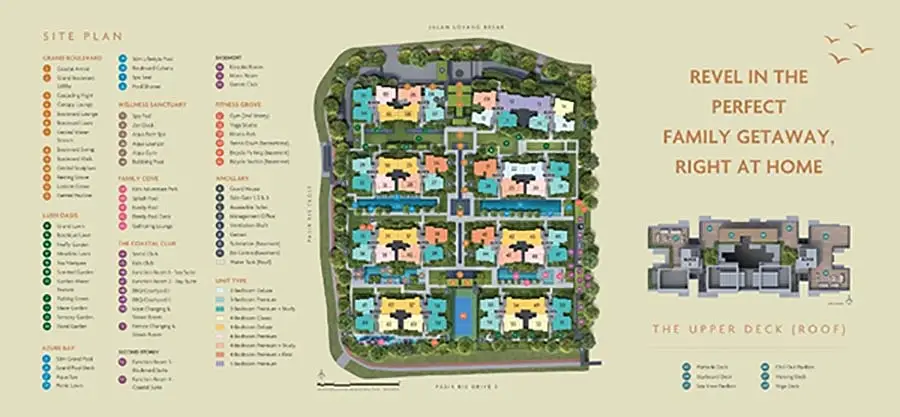
At 748 units across a 28,405 sqm site, Coastal Cabana is unambiguously large. Density is managed through block dispersion and north-south orientation, creating a resort-style internal environment with airflow, communal zones, and outdoor lifestyle spaces. This aligns with the target demographic — families upgrading from HDBs who value space and facilities over exclusivity.
The trade-off is the environment that comes with scale. Shared facilities will experience meaningful usage, particularly around pools and children's play areas during peak hours and school holidays. Buyers seeking a quiet, low-traffic residential setting should calibrate expectations accordingly. Coastal Cabana prioritises community scale and lifestyle breadth over privacy.
Why the Deferred Payment Scheme Matters Here
At many new launches, the DPS is a supporting feature. At Coastal Cabana, it plays a central role in buyer psychology because the project targets upgrader households who are managing both transition timing and near-term cash flow.
For existing HDB owners carrying outstanding loans, DPS reduces financial pressure during the construction phase by deferring the bulk of loan servicing until closer to TOP. This can make an entry at higher quantum feel more manageable and allows buyers to plan their HDB sale timing more comfortably.
What DPS does not do is improve long-term affordability. It does not reduce the purchase price, shrink the total loan, or lower ongoing holding costs. Buyers who use DPS to commit at a quantum beyond their genuine financial comfort will feel the pressure after TOP rather than at entry. The scheme is a cash-flow management tool, not an affordability solution.
Pricing Logic
Coastal Cabana launched at an average of approximately $1,734 psf, placing it at the upper end of historical EC norms. Two structural factors drove early absorption despite this: the Deferred Payment Scheme reduced near-term financial friction, and Pasir Ris had not seen a new EC launch in over a decade, creating pent-up eligibility demand with limited alternatives.
As sales progressed beyond the launch phase, buyer behaviour shifted from broad enthusiasm to more deliberate comparison. Resistance emerged clearly when three-bedroom units crossed the $1.6 million quantum threshold, because EC buyers are constrained by the Mortgage Servicing Ratio and are naturally quantum-sensitive. At this stage, the relevant comparison shifted from "Is this project rare?" to "Can I hold this comfortably through MOP and beyond?" — a more disciplined question that narrows the buyer pool.
For buyers evaluating remaining inventory, the relevant framework is not launch pricing or phase-one narratives but current available units, current quantum levels, and a realistic assessment of exit options after MOP.
Coastal Adjacency and Downtown East as Lifestyle Anchors
True coastal-adjacent EC positioning is genuinely rare in Singapore, and for buyers already living in the East, this differentiation was a primary trigger. High-floor stacks with sea or park exposure attracted the strongest early demand, confirming that view-driven differentiation shaped buyer decisions alongside affordability.
Downtown East functions as a practical lifestyle hub that partially offsets the project's distance from Pasir Ris Central. Immediate access to supermarkets, dining, entertainment, and family amenities helps meet daily household needs without requiring a trip to the main town centre. For households with young children or multi-generational living arrangements, this proximity materially supports daily liveability.
URA Planning Context
URA's planning direction for Pasir Ris centres on gradual town rejuvenation rather than dramatic rezoning. The area is positioned as a recreational and residential sanctuary rather than a high-density employment or commercial node. This means planning improvements enhance liveability incrementally rather than triggering sharp price re-rating events.
For Coastal Cabana, planning alignment reinforces long-term residential desirability rather than creating near-term price catalysts. Buyers should view URA planning as supportive of the project's lifestyle positioning over a long holding horizon, not as a source of short-term appreciation.
Buyer Suitability
East-side HDB upgraders are the primary segment. Families already living in Pasir Ris or Tampines who want more space, better facilities, and coastal lifestyle access while remaining in a familiar environment form the strongest and most consistent demand base. Their decision is driven by lifestyle continuity rather than capital optimisation.
Families prioritising space over transport convenience represent the secondary demand group. These buyers are less sensitive to MRT distance but highly sensitive to absolute monthly outlay. They value larger rooms, dedicated study or helper accommodation, and an environment that supports a family with growing children.
Selective long-term investors represent a small and opportunistic segment. Rental demand exists from families and professionals working in the East, but yields are capped by higher entry quantum. Rental should be treated as a holding supplement rather than the primary return driver.
Buyers who should look elsewhere include those who depend on daily MRT walkability, highly price-sensitive upgraders comparing multiple ECs primarily on quantum, investors expecting fast post-MOP capital appreciation, and households seeking boutique-style privacy. These are structural mismatches, not personal preferences that can be accommodated with minor adjustments.
Exit and Liquidity
Post-MOP resale demand at Coastal Cabana will come primarily from upgrader families priced out of newer private launches who are willing to accept the same transport trade-offs as today's buyers. This pool exists and provides baseline liquidity, but it is not elastic. Buyers should expect resale to be transactional and selective rather than fast and momentum-driven.
Liquidity for larger units is not automatic. While family demand for four-bedroom and five-bedroom layouts exists, higher absolute quantum means a narrower resale buyer pool. In softer markets, buyers will negotiate harder on price, and units may take longer to move. For mid-sized three-bedroom configurations, the buyer pool is broader and exit conditions more predictable.
MRT distance remains a permanent pricing constraint. In a strong market, buyers accept it. In a softer market, it becomes a negotiation point. This dynamic does not resolve with time and should be factored into exit expectations from the point of purchase.
Risk Scenarios
Quantum compression risk: As EC prices approach private housing levels, the affordability advantage of the EC structure narrows. This caps upside and makes exits more sensitive to market and financing conditions.
Transport friction risk: The mixed walk-and-bus commute to Pasir Ris MRT remains a permanent characteristic of the location and will recur as a negotiation point in softer resale markets.
DPS over-reliance risk: Buyers who stretched their quantum at entry using DPS face higher sensitivity if household finances tighten between purchase and TOP, or if interest rates rise materially.
Density and maintenance cost risk: A large facility set and high unit count will likely produce above-average MCST fees over time. For MSR-constrained households, ongoing costs are as important as purchase price in long-term financial planning.
Positive scenario: Sustained demand for lifestyle-led, space-generous family living in the East supports consistent occupancy and steady resale demand through market cycles.
Pros and Cons
Pros
Genuinely rare coastal-adjacent EC positioning
Large family-oriented layouts across all unit types
DPS improves transition timing and cash-flow management
Comprehensive resort-style facilities and community environment
Proximity to Pasir Ris Park and Downtown East for daily lifestyle use
Cons
MRT access requires a combination of walking and bus travel rather than a direct walk
Entry quantum is at the upper end of EC market norms
DPS can create a misleading sense of affordability at higher quantum levels
Post-MOP exit is selective and time-sensitive rather than broadly liquid
Large-scale living is not suited to buyers prioritising quiet or boutique environments
Takeaway
Coastal Cabana is a coherent choice for East-side upgrader families who want space, coastal lifestyle access, and payment flexibility within the EC framework. Its strengths are genuine. So are its constraints. For the right household, the combination of large layouts, Pasir Ris Park proximity, and DPS flexibility justifies the entry quantum. For everyone else, the same features that make it attractive at launch become friction points at MOP and beyond. Buyer alignment with the project's structural profile matters more here than at most other launches.
Frequently Asked Questions
Is Coastal Cabana better suited for own-stay or investment?
It is structurally an own-stay EC. Its layouts, facilities, and buyer profile favour long-term family occupation. While rental demand exists post-MOP, this is not a momentum-driven investment vehicle. Investors should enter with moderate yield expectations and a long holding horizon.
Does the DPS make Coastal Cabana more affordable?
DPS improves cash-flow timing, not total affordability. It helps buyers manage the HDB transition but does not reduce the total loan, purchase price, or holding costs. Buyers who treat DPS as an affordability booster rather than a timing tool risk financial pressure after TOP.
How does the MRT distance affect daily life?
For driving households, the impact is manageable. For car-lite households, the mixed walk-and-bus commute to Pasir Ris MRT is a daily reality that does not resolve over time. Buyers should test the actual commute before committing rather than accepting it in theory.
Will Coastal Cabana outperform other ECs after MOP?
Outperformance should not be the base case. Pricing is near the upper band of EC affordability, which limits percentage upside. Post-MOP outcomes will be shaped by entry discipline, unit selection, and market conditions at exit rather than by any structural scarcity advantage.
Is the project's large scale a concern?
For buyers who value community facilities and a family-active environment, scale is a positive. For those expecting quiet surroundings or boutique living, it is a genuine mismatch. Buyers should visit during peak hours before deciding.
What is the right holding horizon for Coastal Cabana?
Buyers should plan to hold through MOP and ideally beyond, with a realistic exit window of seven to twelve years from purchase. Shorter horizons increase exposure to market timing risk and the selective nature of the resale buyer pool.
Who is most likely to regret buying Coastal Cabana?
Buyers who underestimate the daily impact of MRT distance, use DPS to commit at a quantum beyond their genuine financial comfort, or expect a broad and liquid post-MOP market. These are expectation mismatches rather than project flaws, and they are avoidable with honest pre-purchase assessment.
Interested in Coastal Cabana EC?
Get the latest pricing and stack recommendations from a verified consultant — no obligation.